0

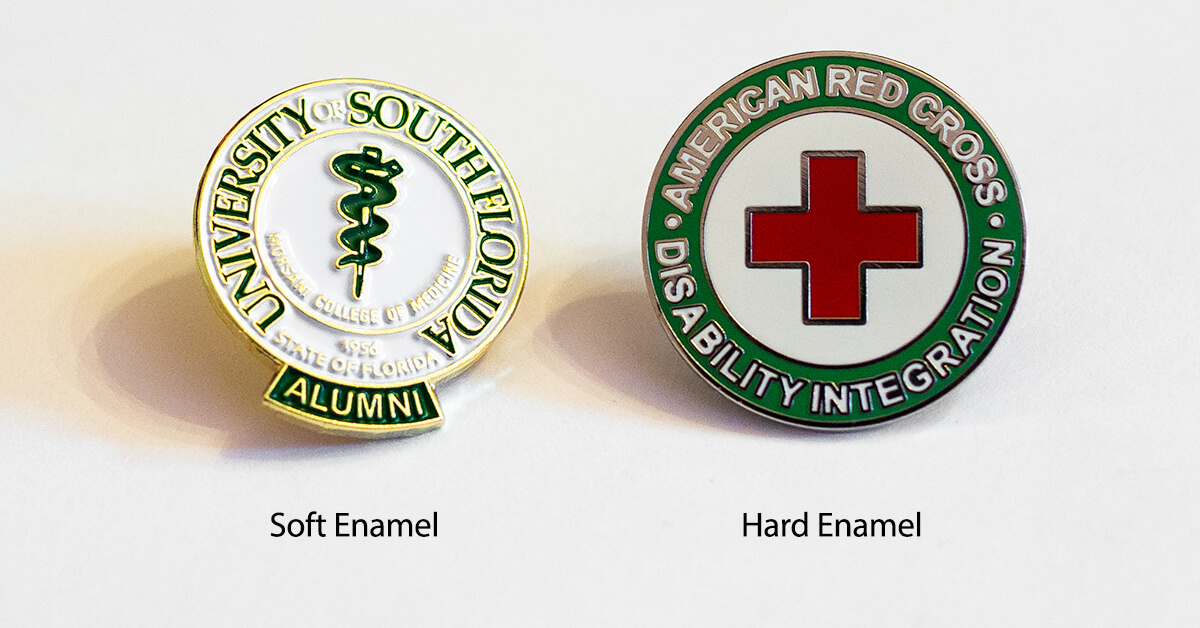
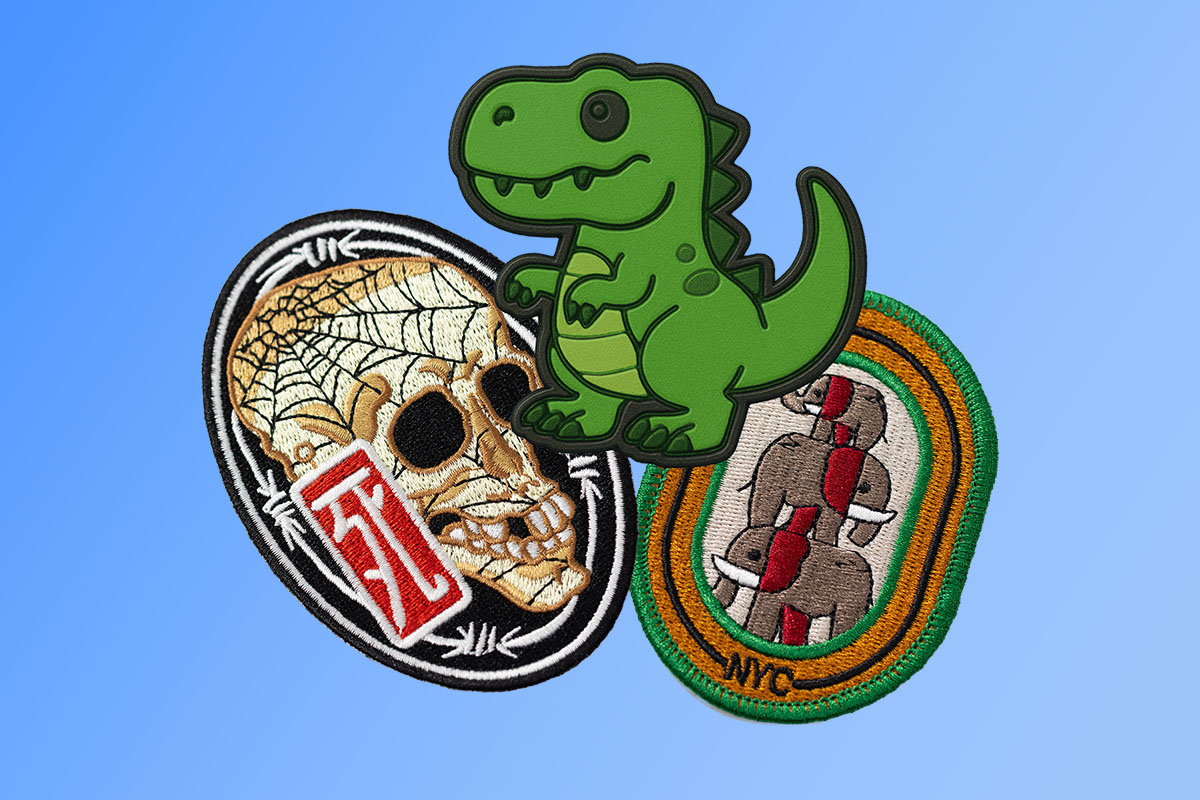
- Neither is better overall: soft enamel is textured and cheaper, hard enamel is polished flat and more scratch resistant.
- On our price list soft enamel costs $6 to $41 less at 100 pieces, and the gap widens on larger pins and bigger runs.
- Choose soft enamel for trading pins, events and dye-colored metal; choose hard enamel for corporate, award and daily-wear pins.
- Rub a finger across the face: raised metal ridges mean soft enamel, a flush surface means hard enamel.
Neither one wins outright. In the soft enamel vs hard enamel choice, soft enamel gives you a textured pin with color sitting below raised metal lines, and it costs less. Hard enamel is baked and polished flat, so it feels smooth, reads as more premium and resists scratches better. Both are solid metal, and both start from the same die.
That's the short version. The rest of this page covers the questions we get asked most before an order: where the money actually goes, which design details force your hand, and when the cheaper option is simply the right one.
Get a free proof for either style in 4 hours
Quick verdict
Choose soft enamel if: - Budget matters, or you're ordering a lot of pins - You want dye-colored metal (black, red, blue, white and more) or rainbow plating - The pins are for trading, events, clubs, giveaways or a fun, cartoon-style design - You'd like to add an epoxy dome for a smooth, glossy top
Choose hard enamel if: - The pin represents a company, an award or a milestone - It'll be worn every day and needs to shrug off scratches - You want the flat, polished look of jewelry - You need very fine printed detail on top of the enamel (silkscreen sits best on a flat surface)
Soft enamel vs hard enamel at a glance
- Surface: soft enamel is textured, with enamel sitting below raised metal lines. Hard enamel is flat, polished level with the metal.
- How the enamel sets: soft enamel is air dried and settles slightly. Hard enamel is baked at high temperature, then polished.
- Scratch resistance: soft enamel is good. Hard enamel is the best we make.
- Color: both take any Pantone solid. Soft enamel colors look bright; on hard enamel, heat can darken colors a little.
- Metal finishes: soft enamel takes all platings plus dye (painted) metal. Hard enamel takes all platings except dye metal.
- Price (1 inch, 500 pieces): soft enamel $715, hard enamel $780.
- Production speed: soft enamel can be produced faster. Hard enamel is slower.
- Best for: soft enamel suits trading pins, events and clubs. Hard enamel suits corporate, award and recognition pins.
Prices are from our pricing page as of September 2026 and include free design, free US shipping, the mold, setup and a backing card. Plus applicable taxes.
How we compared them
We make both styles in-house to the same spec, from the same dies, with the same metals (iron, brass or copper) and the same Pantone Solid Coated color system. So this isn't a spec-sheet comparison. The prices below come straight from our published price list, the production notes come from how our own orders are made, and where a claim depends on your specific design, we say so.
Head-to-head
Look and feel: a matter of taste, not quality
Here's the test we give everyone. Rub your finger across the face of the pin. Feel ridges? Soft enamel. Feels like glass? Hard enamel.
The names cause more confusion than anything else in this business. The first two questions people ask are "will it bend?" and "is it made of metal?" The answer is no, and yes. "Soft" and "hard" describe how the enamel is finished, not how strong the pin is.
Both start the same way. A die is struck into the metal, which leaves raised ridges and recessed pockets. Enamel goes into the pockets, and the ridges keep each color separate.
With soft enamel, the enamel is air dried and settles a little as it cures. The metal lines end up standing proud of the color. You can see the depth and you can feel it, which is why we describe soft enamel as dimensional. Pair it with dye-colored metal and you get the high-contrast, almost cartoon look you see on a lot of trading pins.
With hard enamel, we fill the enamel right up to the tips of the metal lines, heat it at a very high temperature to cure it, then polish it until metal and enamel sit on the same level. The result is flat, glossy, and closer to a piece of jewelry.
Durability: hard enamel wins, but not by as much as you'd think
Hard enamel's baked, polished surface is the most scratch-resistant finish we make, which is why we point people toward it for pins that get worn daily on a uniform or a lanyard.
But a soft enamel pin isn't fragile. Both are solid metal and both last for years with basic care. The real difference is the surface finish. If you want a smooth top on a soft enamel pin anyway, an epoxy dome adds one (more on that below).
Care is simple for either type. A damp or dry cloth does the job. On hard enamel, never use vinegar; it can tarnish the metal. Our guide to keeping enamel pins looking like new covers the rest.
Price: soft enamel is cheaper, and the gap grows with size
Soft enamel costs less at every size and quantity on our price list. At 100 pieces the difference is small. On big pins in big runs it isn't.
Prices below are soft enamel / hard enamel for the whole order:
- 1/2 inch: 100 pcs $280 / $290. 500 pcs $640 / $700. 1,000 pcs $1,070 / $1,150.
- 1 inch: 100 pcs $292 / $301. 500 pcs $715 / $780. 1,000 pcs $1,250 / $1,350.
- 1 1/2 inches: 100 pcs $324 / $348. 500 pcs $870 / $955. 1,000 pcs $1,460 / $1,600.
- 2 inches: 100 pcs $383 / $424. 500 pcs $1,150 / $1,400. 1,000 pcs $1,950 / $2,350.
So on 100 one-inch pins, hard enamel adds $9 to the whole order. On 1,000 two-inch pins it adds $400. If you're ordering a small batch for a company event, that upgrade costs less than lunch. If you're ordering 1,000 large trading pins, it's real money.
Every price above already includes free professional design, free shipping in the US, and no setup or mold fees. First orders get 10% off. For why enamel pins cost what they do in the first place, see how much it costs to make enamel pins.
Color and finish options: soft enamel gives you more
This is the one place where the choice can get made for you.
Dye metal (sometimes called painted metal) is soft enamel only. The color goes onto the metal before the enamel is added, a step that only fits the soft enamel process. We offer black, red, blue, green, yellow and white dye; see the full list on our metal finishes page.
People mix up two of those finishes all the time:
- Black nickel is an electroplated finish, the same process that bonds gold to a brass or iron base. It's a shiny, grayish black, and it works on soft or hard enamel.
- Black dye is sprayed on. It's pure black, not shiny, and soft enamel only. That stark contrast against bright enamel is what gives a lot of soft enamel pins their bold, cartoon look.
Glitter works on both soft and hard enamel. On a soft enamel glitter pin we recommend adding an epoxy dome, because the glitter flecks leave a rough surface that isn't ground smooth.
Hard enamel has one design advantage of its own: because the surface is flat, silkscreen printing can sit on top of it to add tiny details the metal lines couldn't hold.
Turnaround: soft enamel is a little quicker
Soft enamel cures at a lower temperature, so it can be produced faster than hard enamel. Most of our enamel orders reach your door within 10 to 15 business days after you approve the design and pay. If your deadline is tight, tell us the date; soft enamel gives us more room to hit it.
Neither enamel style qualifies for our 72-hour rush. That's reserved for in-house offset printed pins, which carry a rush fee and come in stock shapes. More on timelines in our turnaround guide.
Soft or hard enamel: which one for your project?
- Trading pins for a tournament. Soft enamel. You're ordering in volume, kids want bright colors, and glitter or dye metal makes them stand out on a trading bag. See our guide to pin trading.
- Employee recognition or years-of-service pins. Hard enamel. They're worn on a lapel for years, and the polished finish looks like the reward it is.
- Trade show giveaways. Soft enamel. Lower cost per piece and you'll hand out hundreds.
- Donor or award pins for a nonprofit. Usually hard enamel for the premium feel, though soft enamel with an epoxy dome is a smooth, cheaper alternative. We also offer discounts for certified non-profits and military units.
- A club, band or emoji pin with a fun look. Soft enamel with dye metal.
- A corporate logo with very fine text. Hard enamel with silkscreen detail, or an offset printed pin if the logo has gradients.
Pros and cons
Soft enamel - Pros: lower price, bright colors, works with dye metal and rainbow plating, faster to produce, takes an epoxy dome well - Cons: textured surface can look less formal; glitter needs an epoxy dome to stay smooth
Hard enamel - Pros: most scratch-resistant finish, flat and polished jewelry look, accepts silkscreen detail - Cons: costs more (up to $400 more on 1,000 two-inch pins), slower to produce, no dye metal, heat can darken colors slightly
FAQ
Is hard enamel worth the extra cost?
For small orders, usually yes: on 100 one-inch pins it's $9 more for the whole order. For large runs of big pins it depends on the use. A pin that gets worn daily or given as an award justifies it; a giveaway usually doesn't.
Do soft enamel pins bend or break more easily?
No. Both are made of the same die-struck metal. "Soft" only refers to how the enamel is finished, not the metal.
Can a soft enamel pin be made smooth?
Yes. An epoxy dome is a clear coating that fills the recesses and gives soft enamel a smooth, glossy top. Read what the epoxy dome on custom pins does before you add one; it has one downside worth knowing.
What's the minimum order?
Our minimum for pins is 50 pieces. The price list starts at 100 pieces, so ask for a quote on anything smaller or in between.
Can I see a sample before I order?
Every order gets a free digital proof, usually within 4 hours. If you want a physical sample of your own design, it's $200 per design, and $125 of that is credited to your full order if you go ahead without changes.
Designing a challenge coin, not a pin?
The trade-offs are similar but the thicker metal changes a few things. We cover it in hard vs soft enamel for coins.
Our recommendation
If you're unsure, start with soft enamel. It's our most popular style for a reason: it costs less, it's quicker, and it gives you the most finish options. Move to hard enamel when the pin stands for something formal or gets worn every day, especially on small orders where the upgrade costs only a few dollars.
Still can't decide? Send us your artwork. Our design team will tell you which style suits it and send a free proof, usually within 4 hours. Request your free quote.