0



Key Takeaways
- Inert Materials Only: Use acrylic, glass, or velvet. Avoid PVC and raw cardboard to prevent chemical corrosion.
- Climate Matters: High humidity is the enemy of metal finishes. Use silica packets in enclosed displays.
- Edge-Handling is Law: Protect the "strike" of the coin by never touching the flat surfaces with bare fingers.
Challenge coins carry service, milestones, and stories worth protecting. We help teams and collectors keep those coins safe while showing them with respect and clarity.
You store and display challenge coins safely by using protective holders or display cases, avoiding direct handling, and keeping them in a clean, dry, temperature‑stable space. We see many collections lose value from scratches, dust, or oxidation when coins sit loose in drawers or bags.
We walk through smart storage options, clean display choices, and simple maintenance habits that preserve condition without hiding what matters. As a custom promotional products company, we also design challenge coins meant to last, so when you plan your next coin or display upgrade, our free quote makes the next step easy.
Essential Storage Methods for Challenge Coin Collections
Safe storage protects surface detail, finish, and long-term value. The right cases, stable environmental control, and simple handling habits prevent most damage we see in challenge coin collections.
Choosing the Right Storage Cases
We recommend storage cases that balance protection with visibility. Rigid materials reduce movement, while inert linings prevent chemical reactions with metal finishes.
Common Storage Options:
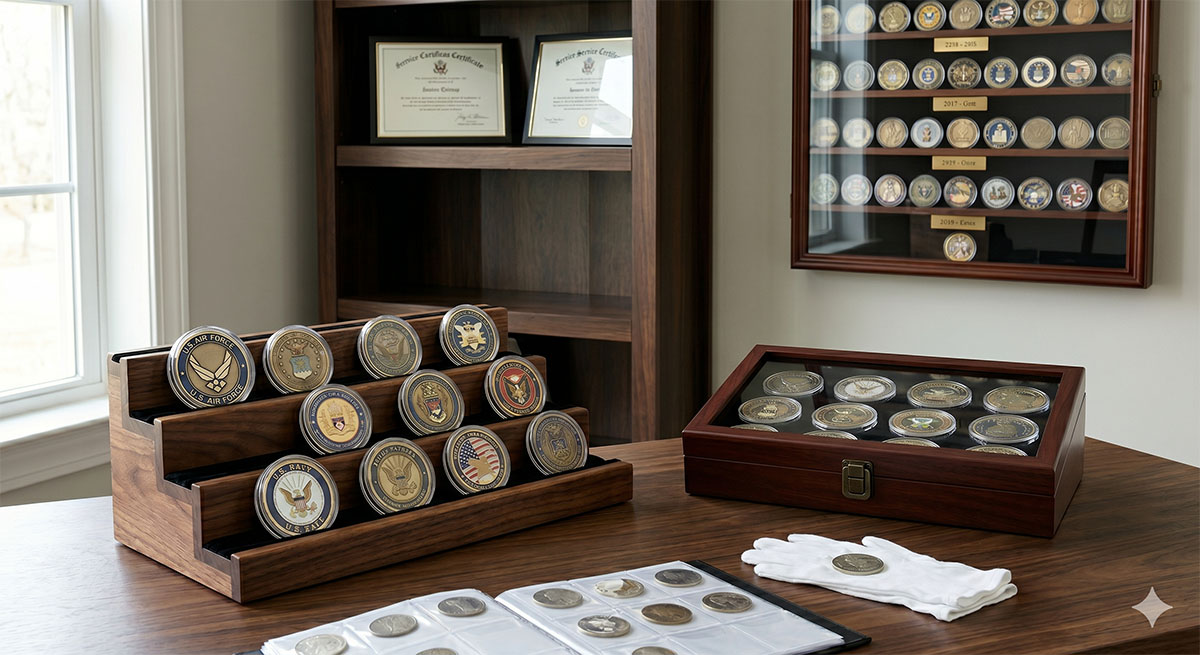
- Acrylic or Glass Display Cases: Best for wall or shelf display; provides clear viewing with dust protection.
- Velvet-Lined Coin Boxes: Best for long-term storage; cushions edges and raised 3D details.
- Individual Coin Capsules: Best for rare or limited coins; provides full isolation from air and skin oils.
- Felt Trays with Dividers: Best for large collections; allows organized access without stacking.
Note: Avoid PVC plastics. They release gases over time that can turn silver finishes green or corrode brass.
Climate and Humidity Control
Coins react to their environment. Temperature swings and excess moisture cause tarnish, spotting, and corrosion, especially on copper and plated finishes.
Store coins in a space that stays between 60–75°F with relative humidity near 35–50%. Use silica gel packets inside cases and replace them every few months. Keep coins away from windows and HVAC vents, as sunlight fades enamel and uneven heat can stress the metal.
Avoiding Common Storage Mistakes
Most damage happens during handling or short-term storage. These issues are easy to avoid with discipline:
- Never stack coins: Metal-on-metal contact causes micro-scratches.
- Edge-only handling: Wear cotton gloves or hold coins strictly by the rim.
- No household cleaners: Windex or silver polish can strip the protective plating.
- Avoid "Extreme" Spaces: Basements and attics are too humid and prone to temperature spikes.
Best Practices for Displaying Challenge Coins
We see collections last longer when owners choose protective displays, arrange coins with intent, and control light exposure.
Selecting Display Cabinets and Frames
Choose enclosed cabinets or frames that block dust and limit handling. Glass-front cases with tight seals work well for wall mounting, while tabletop cabinets suit offices and shelves.
Focus on materials that protect metal. Solid wood, powder-coated metal, and acid-free backing reduce corrosion risk. Avoid unfinished wood and cardboard, which can release harmful acids.
Display Comparison:
- Wall-Mounted Case: Best for large collections; saves floor space and keeps a uniform layout.
- Tabletop Cabinet: Best for small to mid-sized sets; offers easy access and a stable base.
- Individual Frames: Best for feature coins; provides visual focus and flexible placement.
Creative Arrangement Techniques
Arrange coins to communicate meaning, not just quantity. Group by service branch, event, year, or theme so viewers understand the context at a glance.
Layout Ideas:
- Chronological Rows: To show career progress or organizational history.
- Symmetrical Grids: For formal settings like lobbies or command offices.
- Feature Stands: For limited-edition or high-relief 3D custom coins.
Lighting Considerations
Control light to protect finishes. Indirect LED lighting works best because it produces minimal heat and no UV radiation. Avoid direct sunlight and halogen bulbs, which fade enamel and discolor metal. For the most accurate color, choose LEDs with a temperature between 3000K–4000K.
Maintaining and Preserving Challenge Coin Collections
Proper maintenance protects finish, detail, and long-term value. We focus on consistent cleaning and routine inspections.
Regular Cleaning Procedures
We recommend light, routine cleaning rather than aggressive polishing. Overcleaning causes wear, especially on antique finishes. Use a soft microfiber cloth to remove dust and fingerprints. For stubborn residue, lightly dampen the cloth with distilled water and dry immediately.
Handling Coins Safely
We limit direct contact to reduce oils and acids transferring from skin. Even brief handling can leave marks that dull the surface over time.
Pro Handling Rules:
- Wash and dry hands before touching the collection.
- Hold coins by the edges, never the face.
- Handle coins over a padded surface (like a towel) to prevent damage if dropped.
Inspecting for Damage or Wear
Regular inspections help catch small issues early. Look for discoloration, spots, or lifting enamel.
Inspection Checklist:
- Surface: Check for spots or haze; clean lightly if found.
- Edges: Look for nicks; adjust storage if coins are touching.
- Enamel: Check for cracks; separate the coin to prevent further moisture ingress.
- Finish: Watch for uneven tone; reduce handling to stop oil transfer.